The Story Behind This
I didn't start this practice because I thought breastfeeding was easy. I started it because I learned, the hard way, that it doesn't have to be as hard as everyone was telling me it had to be.
My First Baby
My first son was full term, no complicated birth, everything textbook fine. I thought breastfeeding was going well. I thought he was doing well. And then I learned he was falling off his growth curve. He wasn't gaining the weight he needed. He wasn't transferring milk effectively.
So I started pumping to try to continue providing breast milk. What came next is a long story, but the short version is this: everything went downhill fast.
I was using the pump everybody recommended. I was using the flanges a lactation consultant sized me into. And almost immediately, I was getting clogged ducts and milk blebs every single day. Every. Single. Day.
I didn't accept that this was just my reality. I searched for answers. I worked with an IBCLC. I worked with a midwife. An integrative medicine doctor. My OB/GYN. Even a breast specialist and surgeon.
And nobody could tell me why.
None of them could look at my body, my situation, my specific circumstances, and say: "Here's what's actually going on."
I left that season devastated and determined that if I ever did this again, I was going to have a different experience.

The Research Begins
Before my second pregnancy, I dove into everything. I educated myself obsessively on pumping and milk supply. I wanted to understand the why behind the recommendations, and why they didn’t work for me.
Plan A: avoid the pump as much and for as long as possible.
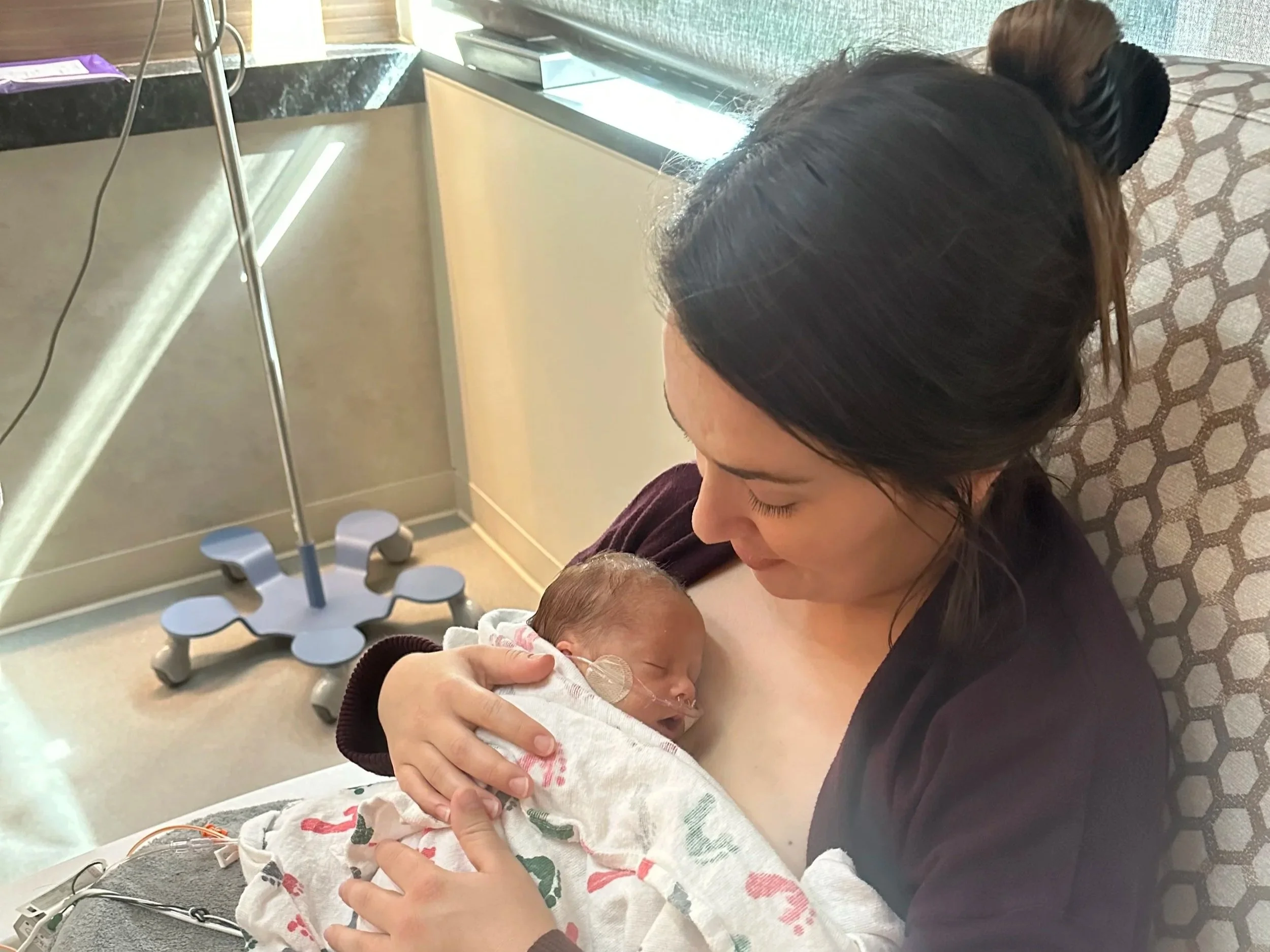
And then, of course, my second son was born early. 34 weeks. NICU admission. 24 days in the hospital.
The NICU
When your baby is in the NICU, breastfeeding looks nothing like what you imagined. He needed tube feeds at first, then transitioned slowly to oral feeds, paced bottle feeding for weeks.
And guess what I relied on completely to establish and maintain my milk supply during all of that?
The pump.
But this time, I had done the research. I understood the individual factors that had sabotaged me the first time. And I had a completely different experience.
No recurring clogs and milk blebs. No mastitis. A pump that actually worked for my body because I understood how it needed to work for my body. Sessions that were comfortable and efficient. A milk supply that built instead of crumbled.
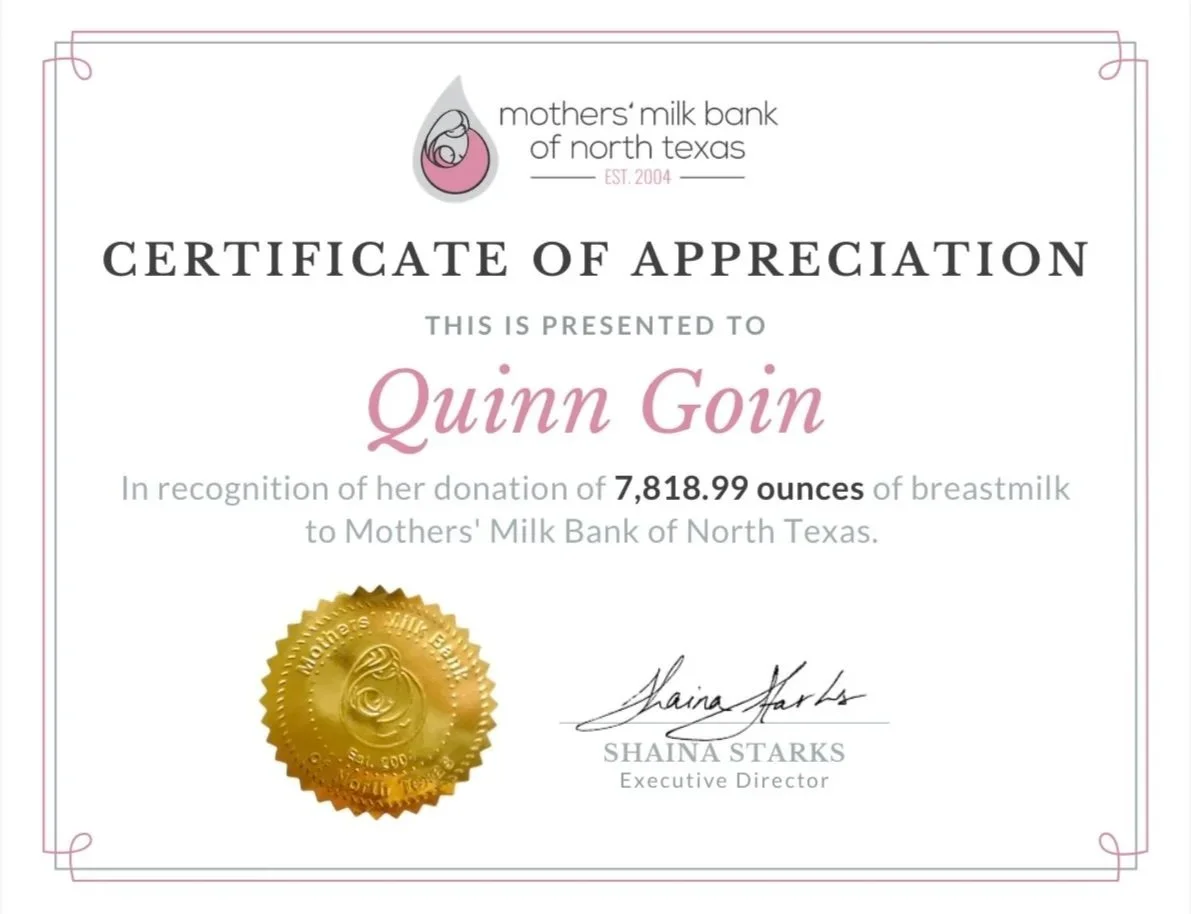
When my son was finally able to nurse, I made the decision to continue pumping and donate my oversupply to other moms and babies who needed it.
That's where my passion was born. In that overflow. In the ability to give someone else what I had been desperately searching for: a redemptive feeding experience. Proof that it could be different.
What I Know Now
Looking back, I can see it clearly: everything that went wrong in my first journey was due to individual factors and variations that were completely overlooked.
Not because the providers didn't care. They all cared deeply.
But because they were handing me textbook advice for a textbook problem, and my body, your body, is not a textbook.
That's why I built this practice the way I did. That's why I don't believe in one-size-fits-all solutions. That's why I refuse to hand someone a generic plan and hope it sticks.
When you sit down with me, I'm not asking: "What does low milk supply usually look like?" I'm asking: "What's going on with your body? What's different about your situation? What individual factors have been overlooked?"
Because they have been overlooked. That's not a judgment on you or on the providers you've seen. It's just the reality: you need someone who is willing to look at all of you, not just the supply numbers.
What I Believe About You
Here's what I know to be true:
Bad moms don't lie awake worrying about whether they're bad moms. They don’t worry about whether or not they are “failing.” And they certainly aren’t putting in all of the effort you are.
The mom sitting in front of me, the one who's researched everything, tried everything, spent money on supplements and pumps and flanges, logged every milliliter, reached out for help, that mom is doing more than enough. This isn't her fault. There is nothing wrong with her body and nothing wrong with needing additional support.
That's exactly what I'm here for.
You deserve to know what's actually going on. You deserve an answer, not just another recommendation. You deserve someone who will look at you, really look at you, and help you understand why your supply is low, why your sessions are painful, why nothing is fitting into your life the way it should.
And you deserve to know, when this is over, that the problem was never you. It was never that you weren't enough. It was that you hadn't found the person willing to actually see you yet.
My Credentials
I'm an International Board Certified Lactation Consultant (IBCLC) and a Certified Lactation Counselor (CLC).
But more importantly, I'm someone who has lived the exact struggle you might be living right now. I've been the mom with the recurring clogged ducts that nobody could explain. I've been the mom terrified her body was failing her baby. I've been the mom who had to rebuild her entire feeding journey from scratch.
And I've learned, from both sides, as a client and as a provider, exactly what it takes to actually fix it.
(Because Knowledge Matters Too)

How I Work
I specialize in low milk supply and pumping challenges because that's where the individual factors are most often overlooked. That's where a textbook answer fails most frequently. That's where the mom in front of me needs someone who understands not just the science, but the specificity of her situation.
I bring evidence-based knowledge, yes. And practical strategies. And a great deal of empathy.
But mostly, I bring the willingness to look at every single piece of your puzzle, your pump, your flanges, your settings & techniques, your goals, and help you see how it all connects. And then I help you rebuild it in a way that feels sustainable, that fits your real life, and that proves to you that your body works.
Because it does.